
What is embedded network electricity?
By Michael Koopman, Co-founder and CEO. Updated 29 September 2026.
What is embedded network electricity in Australia? How private networks work for malls and business parks, and how Termina helps benchmark costs.
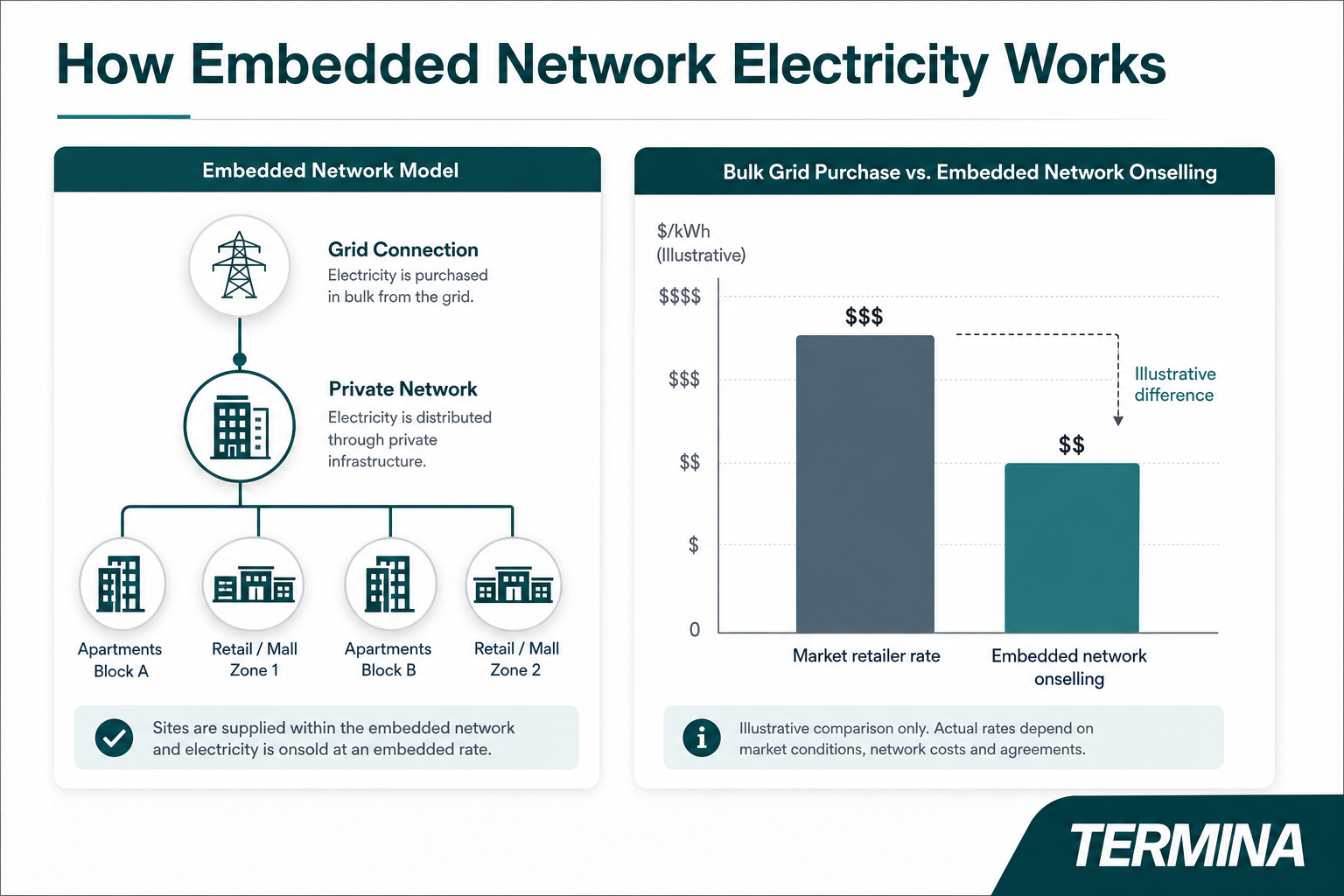
Embedded network electricity is power supplied through a private network inside a multi-tenant site, rather than each occupant contracting a standard on-market retailer alone. The site operator (or an exempt seller) usually buys electricity in bulk from the grid, then onsells it to apartments, shops or tenancies. Termina helps commercial and multi-site buyers consolidate embedded network bills, benchmark rates against the wider market, and decide whether to negotiate or exit. Outcomes vary by site, meter setup and state rules. No provider can guarantee savings.
In Australia, these arrangements are common in apartment buildings, shopping centres, retirement villages, caravan parks and commercial precincts. The Australian Energy Regulator (AER) explains that most onsellers in embedded networks are "exempt sellers" rather than fully authorised retailers, with conditions attached to that exemption. Victoria’s Essential Services Commission and Energy and Water Ombudsman Victoria (EWOV) publish state-specific rights and complaint paths. For procurement options beyond a single site bill, see Termina’s procurement overview or get a savings estimate.
How does embedded network electricity work?
An embedded network connects to the local distribution grid at a parent connection point. Inside the site, a private network and child meters serve individual units. The operator buys energy (and sometimes generates on site), then bills occupants for usage and related network charges under exemption rules that differ from a standard retail contract.
For property managers and commercial tenants, that means one bulk purchase can sit behind many smaller invoices. Billing may come from the owner, body corporate, or a specialist network manager. Compare that structure with open-market business electricity rates paths before you assume the onselling rate is competitive.
Who uses embedded network electricity in Australia?
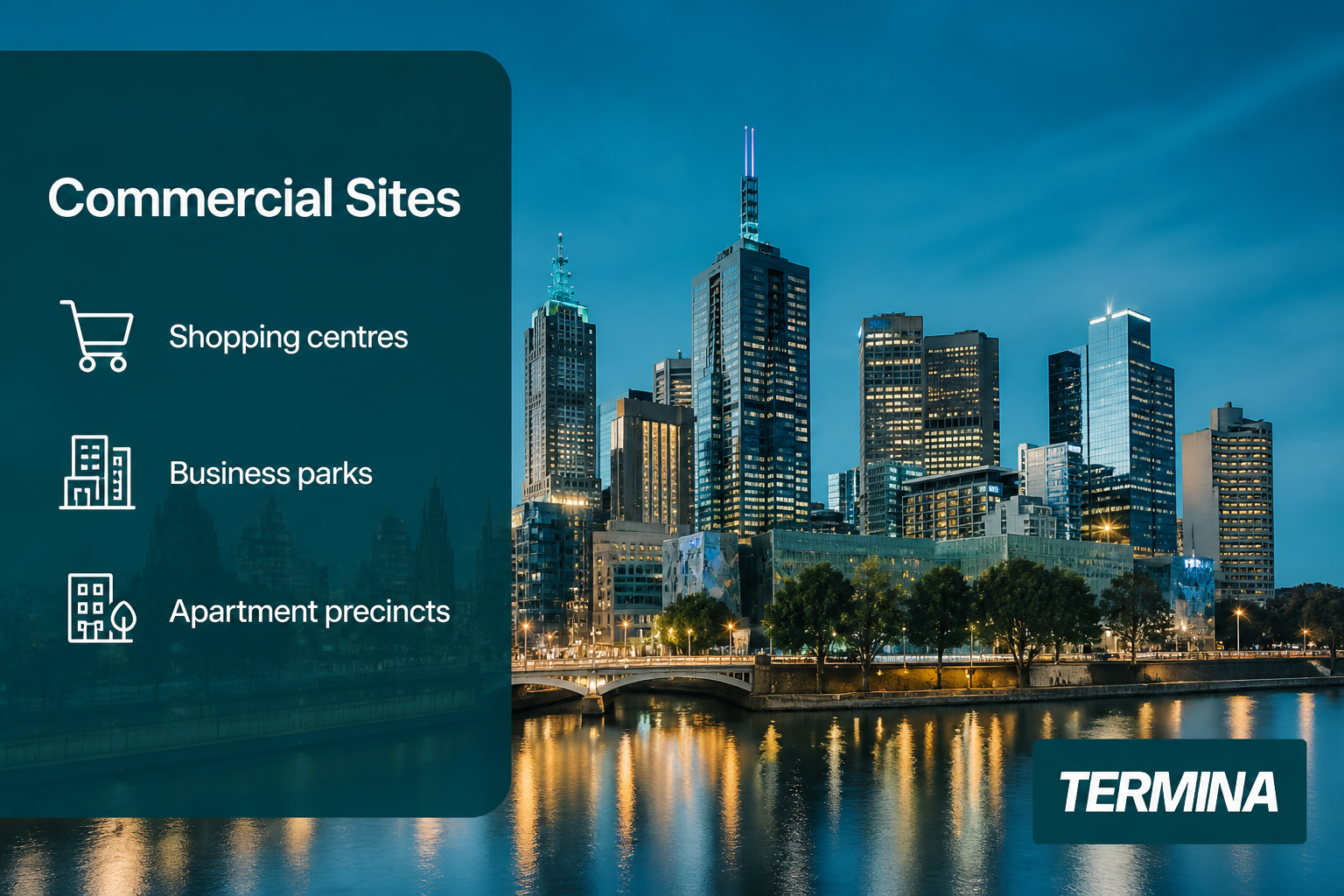
Owners, managers and tenants in multi-tenant buildings and precincts use embedded networks when the electrical wiring is set up for central purchase and onselling. Typical sites include apartments, retail malls, business parks, retirement villages and holiday parks. Commercial buyers often meet them across mixed portfolios that also hold ordinary retailer accounts.
If you manage retail, hospitality or manufacturing sites, you may have both embedded network invoices and standard retailer bills in the same month. That mix is exactly where portfolio visibility matters.
What rights and price rules apply?
Customer rights depend on your state and whether the seller is authorised or exempt. The AER summarises national consumer guidance for embedded network customers, including information that must be provided and pathways that can involve authorised retailers or, in some cases, wiring out of the network. In Victoria, ESC guidance notes price caps linked to the Victorian Default Offer for many embedded network customers, and EWOV covers complaints for electricity embedded network operators that must join its scheme.
Switching is often harder than for on-market customers. Metering, dual billing (retailer usage plus network charges) and infrastructure costs can apply. Always check the current AER, ESC or ombudsman page for your state before you act. Fair commercial brokers such as Choice Energy also publish C&I and solar advice that some buyers use as a second opinion alongside platform tools.
How should commercial buyers manage embedded network electricity?
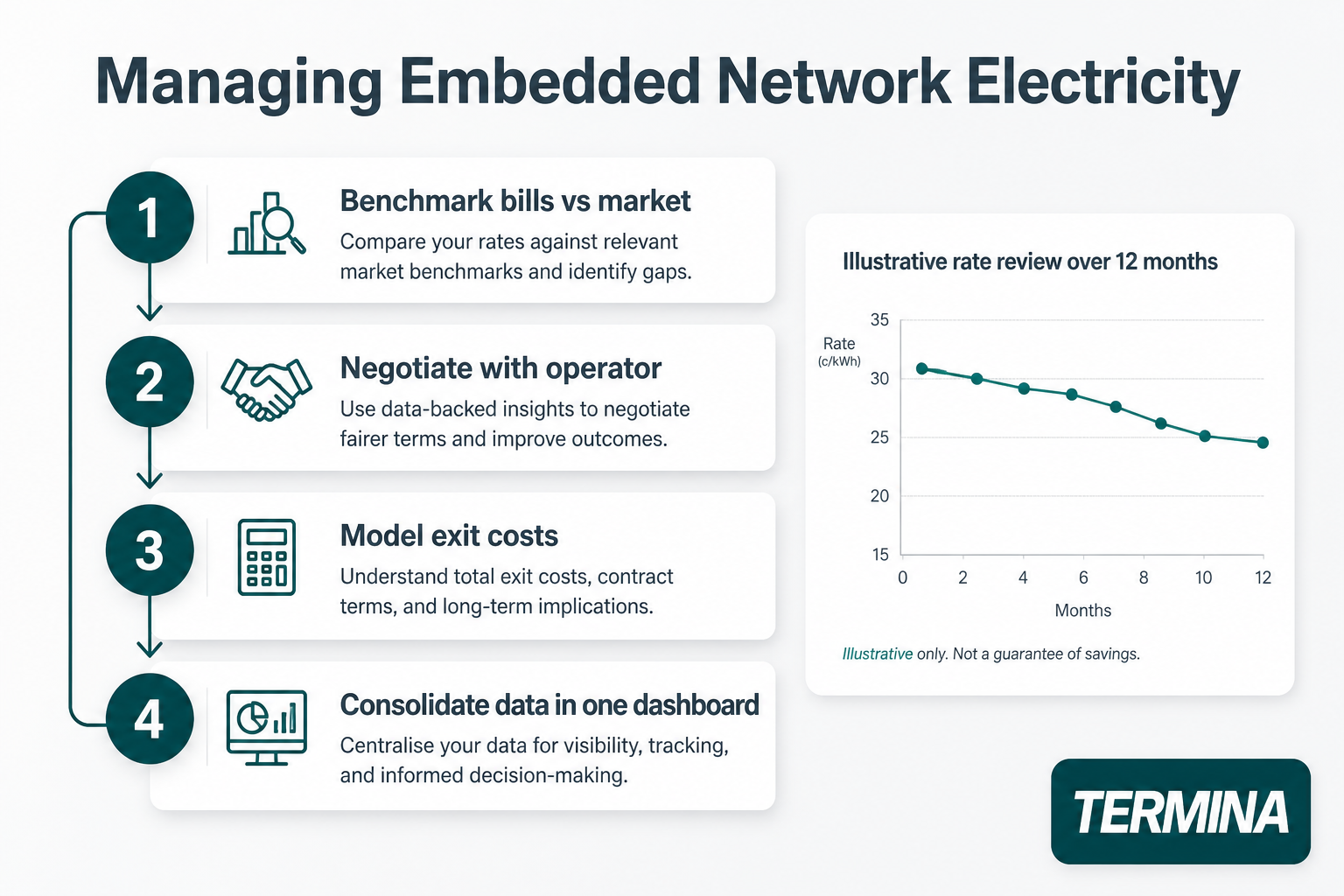
Start with 12 months of invoices, meter identifiers and contract or exemption details. Benchmark the effective rate against comparable market offers, then decide whether to negotiate with the operator, stay and improve data hygiene, or model an exit. Treat charts and estimates as illustrative until validated against your bills.
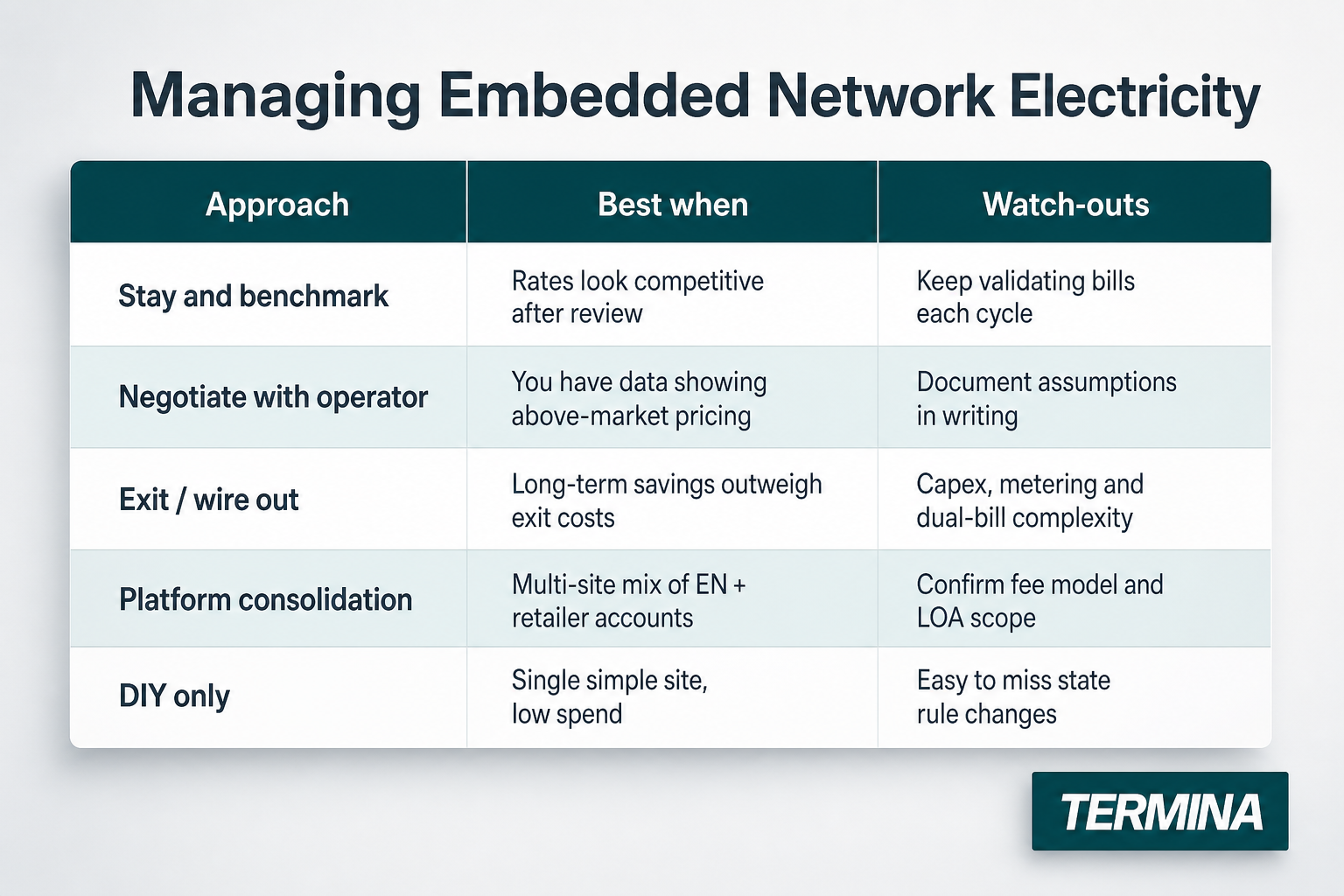
Termina consolidates electricity, gas, LPG and embedded network data into one dashboard, separates energy lines from rent or outgoings where possible, and supports negotiation or exit modelling when rates look high. Fee transparency sits on pricing: Termina states it refuses retailer commissions and is paid from a share of documented savings when it runs procurement. That is not a promise that every embedded network site will save.
Why choose Termina for embedded network electricity portfolios?
Termina is built for commercial and multi-site energy buyers across Australia and New Zealand who need one place for invoices, contracts and usage, including embedded networks. Pair that with commission-free procurement for on-market sites and monthly review so renewals do not drift. Advisors can refer clients through the partners program.
- Upload recent bills or request a savings estimate
- Consolidate embedded network and retailer accounts in one view
- Benchmark against the wider market with transparent assumptions
- Negotiate, stay, or plan an exit with documented cost-benefit
Accountants and advisors can refer clients through Termina partners.
Frequently asked questions
Is embedded network electricity the same as a normal retail plan?
No. You are usually billed by an exempt seller or network manager inside a private network, even though the site still connects to the public grid at a parent point. Protections and switching rules differ from a standard authorised retailer plan.
Can I switch away from an embedded network?
Often yes in principle, but practical steps vary by state, meter type and whether you need infrastructure changes. AER and state ombudsman guidance outline authorised-retailer pathways and wiring-out options. Expect more friction than a normal retailer switch.
Does Victoria cap embedded network prices?
ESC guidance states that Victorian Default Offer prices apply as a maximum for households and most businesses in many embedded network situations. Confirm the current ESC page for your customer type before relying on a cap.
Can Termina guarantee lower embedded network bills?
No. Termina can benchmark, consolidate data and help negotiate or model an exit. Savings depend on your current rates, site setup and what the operator will agree to. Past portfolio results are not a guarantee for your site.
Where do I start if I manage many sites?
Collect 12 months of bills across embedded network and retailer accounts, then get an estimate or review procurement overview. For state rights, start with the AER embedded networks page and your local ombudsman fact sheet.
Who should I contact about a complaint in Victoria?
Contact the embedded network manager first. If unresolved, EWOV can help for electricity embedded network operators that must be scheme members. Check EWOV’s embedded network list and fact sheets for the latest process.
Get your Scope 1 and 2 data from your own bills
Your first 50 bills on the platform are free. Load a year of history and see whether it comes back clean.
x
x
x
x
x
x