
What is commercial electricity in Australia?
Updated 29 September 2026.
What is commercial electricity in Australia? Compare tariffs, DMO or VDO benchmarks, and procurement options for business sites with Termina.
Commercial electricity is electricity supplied to business customers under commercial tariff structures, rather than household plans. It usually includes usage rates, supply charges, and network-related components that vary by region and contract type. Termina helps commercial and multi-site buyers compare full landed costs across retailers and keep reviewing rates after switching. No provider can guarantee savings in every case.
For eligible small customers, Energy Made Easy is the free government comparison service in participating jurisdictions. The Default Market Offer acts as a standing-offer cap and reference point in NSW, south-east Queensland, and South Australia, while Victoria uses the Victorian Default Offer. For portfolio-level procurement and review, see Termina’s procurement overview and pricing.
What does commercial electricity include?
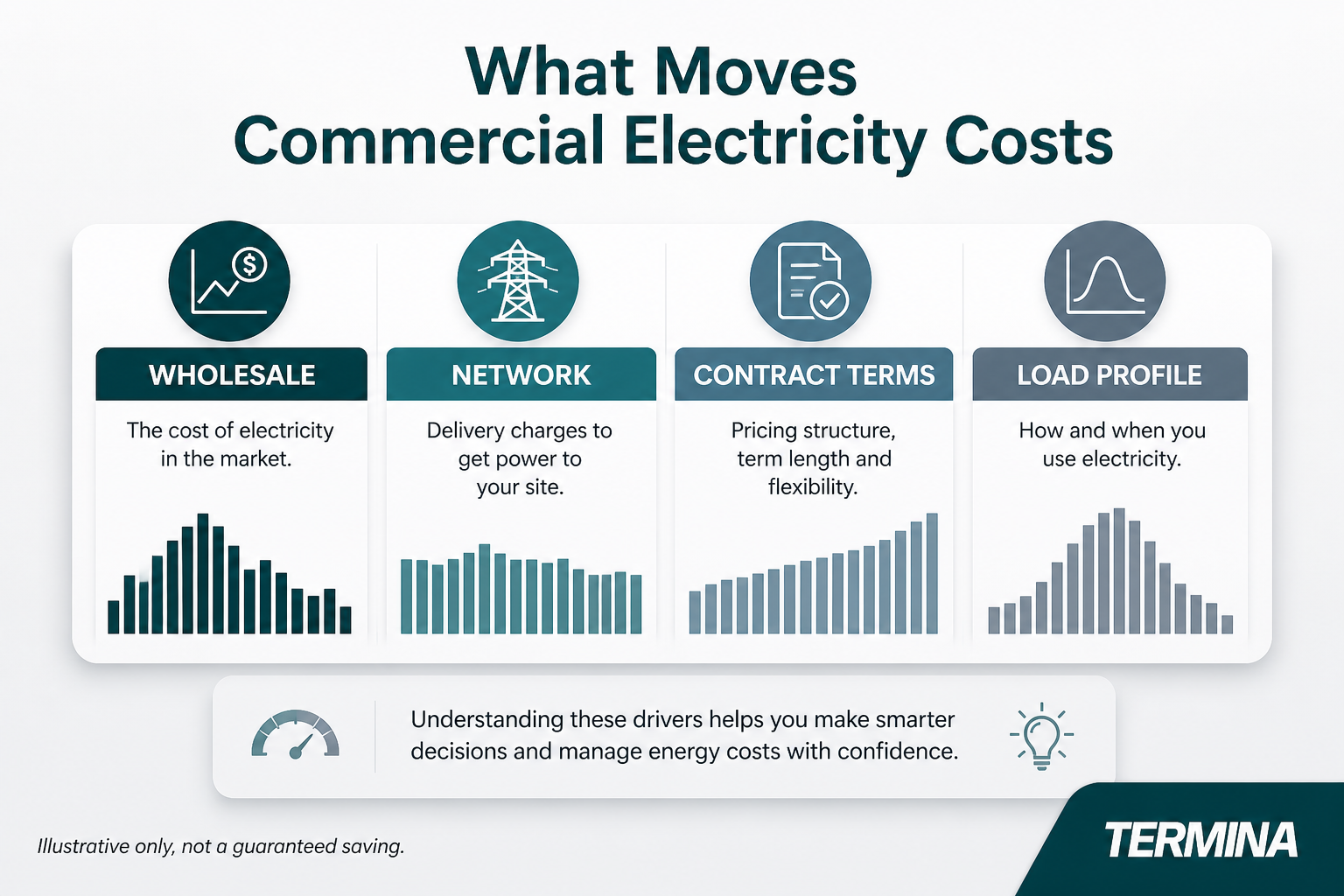
Commercial electricity bills usually combine a usage component (cents per kWh), daily supply charges, and other cost layers such as network and environmental pass-throughs. Some sites also face demand-style structures or time-of-use variations depending on metering and tariff setup.
That means a headline usage rate alone can mislead. The real comparison is the estimated annual cost based on your actual consumption profile, site characteristics, and contract terms.
How is commercial electricity pricing structured?
Pricing structures differ by retailer and customer segment. Small business offers may be closer to standardised plans, while larger C&I contracts can include tailored terms, usage assumptions, and risk settings linked to market conditions.
Commercial buyers should test each quote on full bill impact, not only the advertised cents-per-kWh figure. Include supply, usage timing, and contract conditions in every side-by-side comparison.
How does commercial electricity vary by state and region?
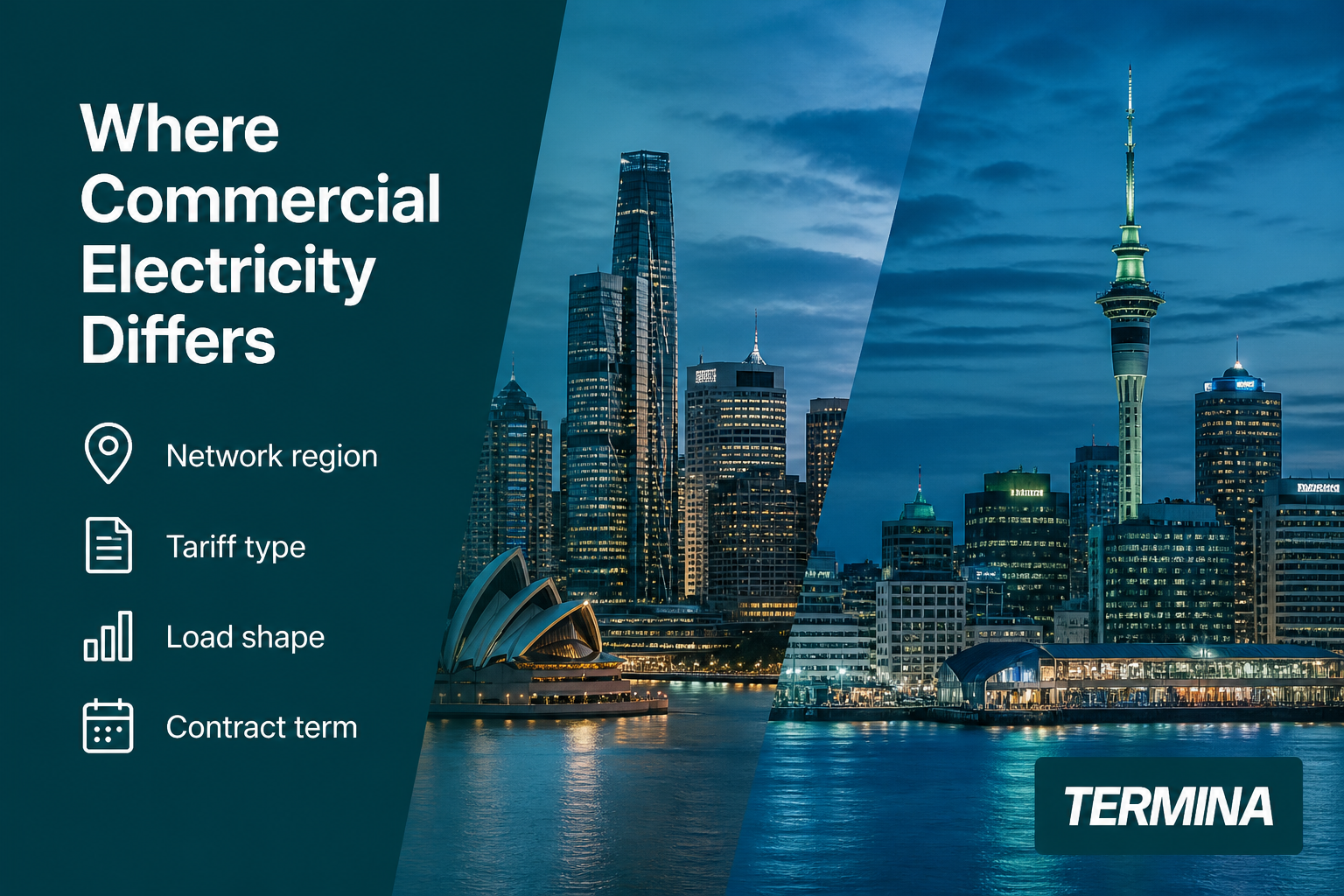
Commercial electricity outcomes vary by distribution zone, tariff rules, and contestability settings. DMO and VDO benchmarks are useful guardrails for parts of the market, but many business outcomes depend on negotiated market offers and contract fit.
If you run sites across Australia and New Zealand, evaluate each location on local market conditions rather than copying one rate across all sites. Differences in network areas and consumption patterns can materially change total cost.
How should businesses compare commercial electricity offers?
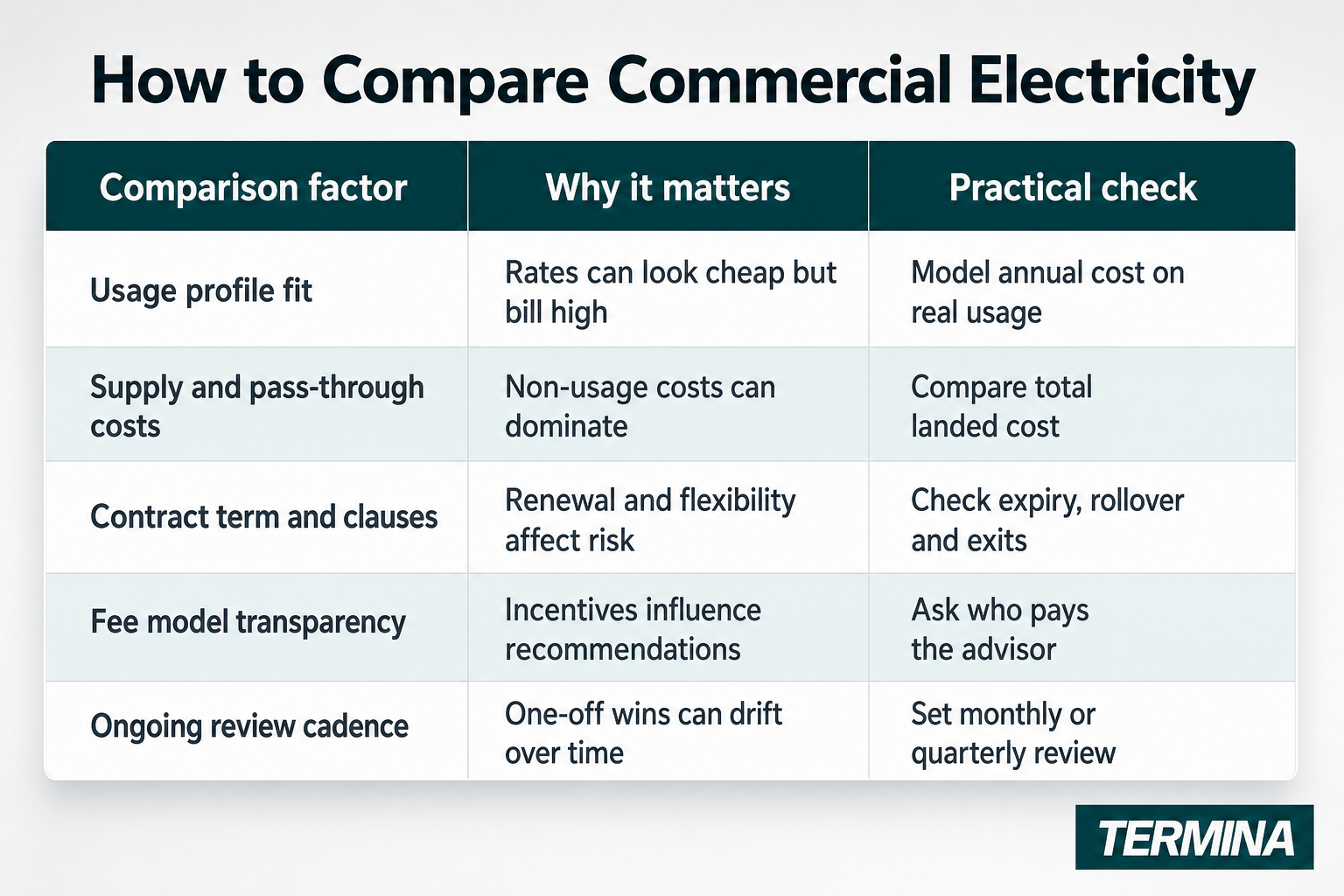
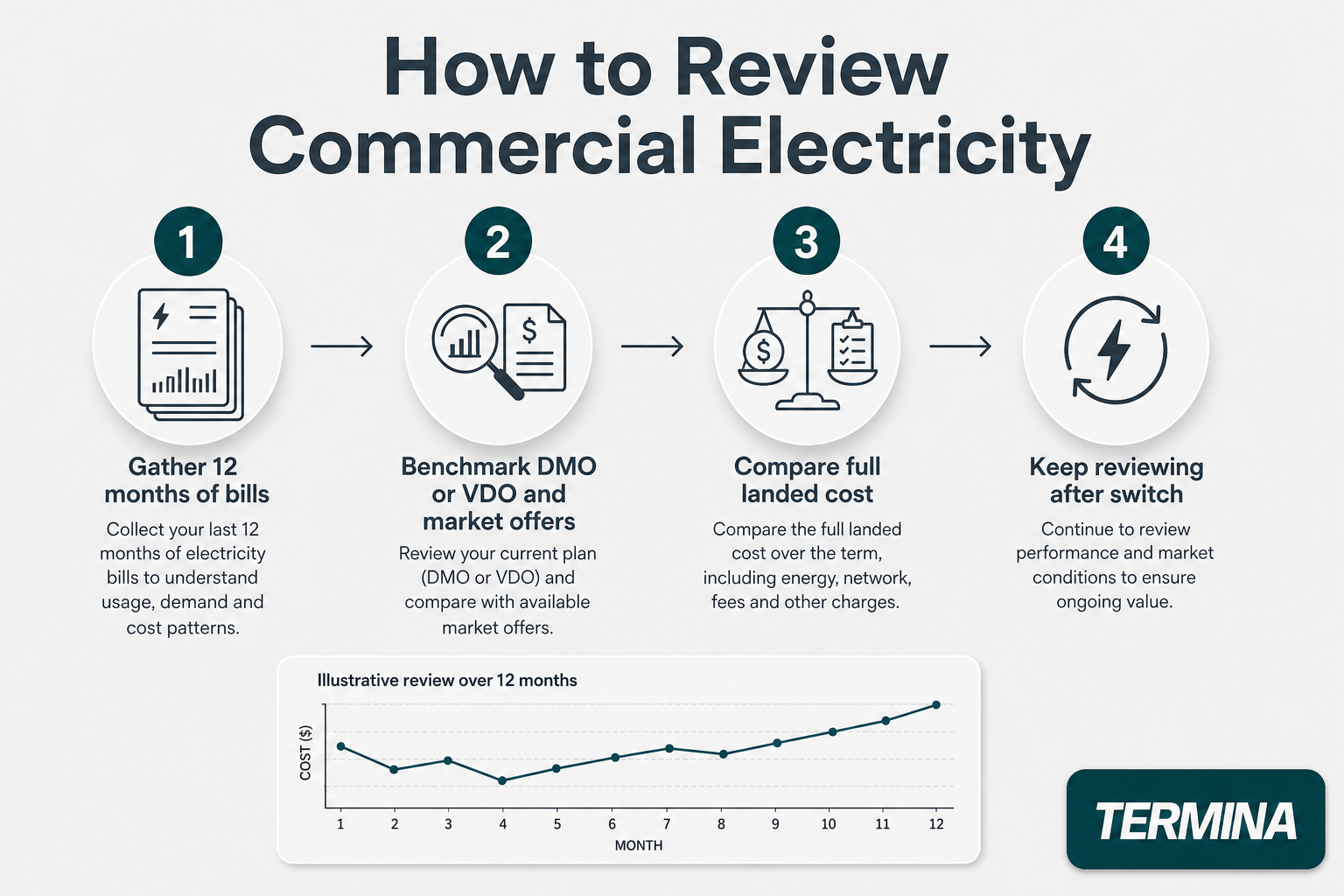
Compare offers using 12 months of bills, meter data, and contract dates. Start with benchmark context (DMO or VDO where relevant), then assess market offers against full annual cost and operational fit. Ask every advisor or broker how they are paid.
Choice Energy is a fair commercial broker alternative in the market. Termina states on pricing that it refuses retailer commissions and uses a savings-linked model. Either way, assumptions should be explicit and documented.
Why use Termina for commercial electricity management?
Termina is built for business energy buyers that want transparent procurement and continuous optimisation, especially across multiple sites. It combines market comparison with portfolio visibility so finance and operations teams can track rate outcomes over time.
Start with a recent bill through get estimate, then review the procurement model in detail at procurement overview. Advisors can also refer clients through Termina partners.
Frequently asked questions
Is commercial electricity different from business electricity rates?
They are closely related. Commercial electricity is the broader category of business supply and contract structures, while business electricity rates usually describe the specific charges on the bill.
Can I use Energy Made Easy for commercial electricity?
Yes, for eligible small business customers in participating jurisdictions. It is a free government service and a useful baseline, but larger or multi-site portfolios often need deeper tender and review workflows.
What are DMO and VDO in simple terms?
They are benchmark and protection mechanisms for certain customer groups. DMO applies in NSW, south-east Queensland and South Australia, while VDO applies in Victoria.
Does a lower kWh rate always mean a better commercial deal?
No. Daily charges, pass-through costs, tariff structure, and contract terms can outweigh headline usage rates. Always compare estimated total annual cost.
Can Termina guarantee lower commercial electricity costs?
No. Outcomes depend on market conditions, site load, contract timing, and network region. Termina focuses on transparent comparison and ongoing review, not guaranteed savings claims.
When should I review my commercial electricity contract?
At minimum, review before contract expiry and whenever market conditions shift materially. Multi-site portfolios usually benefit from recurring monthly or quarterly review rather than annual-only checks.
Get your Scope 1 and 2 data from your own bills
Your first 50 bills on the platform are free. Load a year of history and see whether it comes back clean.
x
x
x
x
x
x